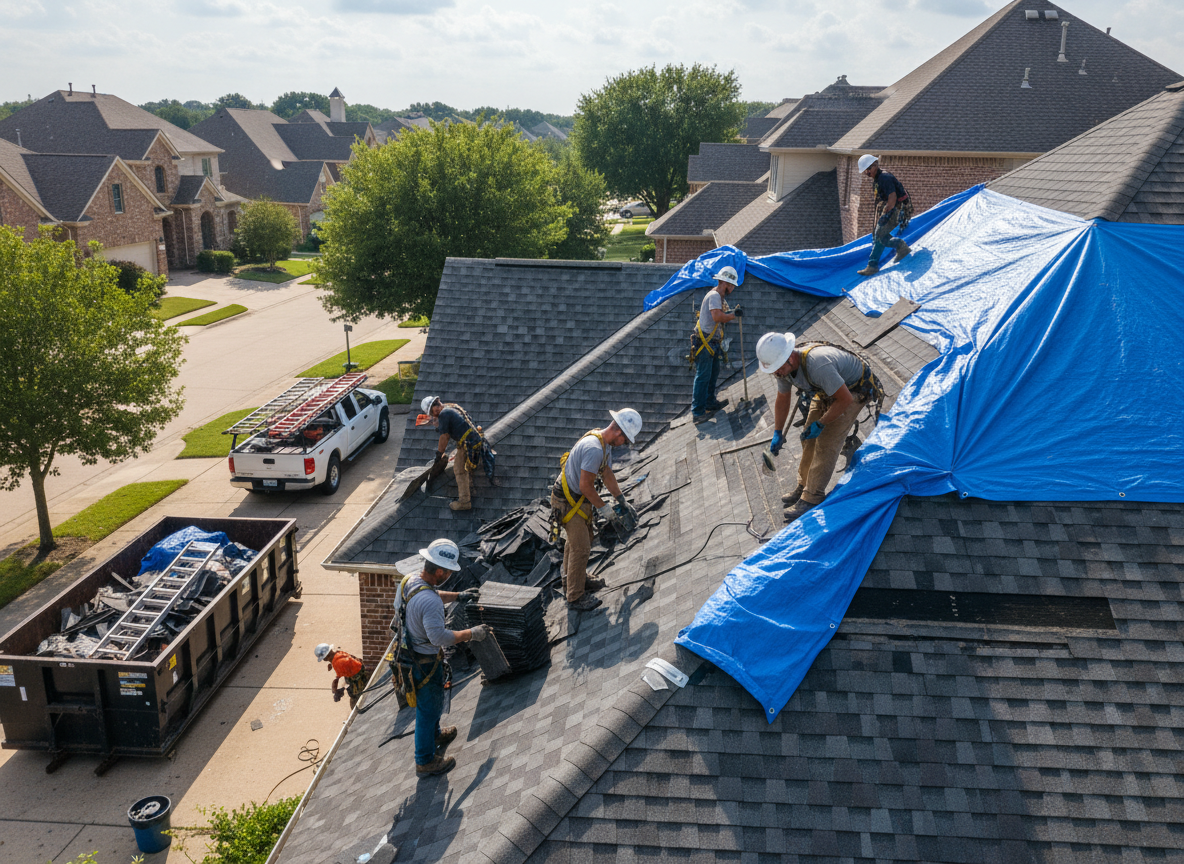
Austin roofs live a hard life. Summer afternoons push past 100°F and bake asphalt shingles until they curl and lose their granules, then spring storms roll in off the Hill Country and drop hail on the same slopes that have been cooking since May. Between the UV punishment and the wind-driven rain that comes with a good Central Texas squall line, roof repair in Austin is rarely a one-time event — it is a maintenance rhythm. Homeowners from Hyde Park bungalows to Mueller new-builds learn to look up after every big storm, because a granule-scarred shingle or a lifted flashing today becomes a stained ceiling in the living room by the next rain.
The housing stock here is a mix of eras, and each one fails differently. Downtown, Clarksville and Travis Heights hold a lot of 1920s–1950s homes with steep gables, pier-and-beam framing and small, cut-up roof planes that take more flashing and valley work than a modern tract roof. Westlake and Barton Hills lean toward larger custom homes with complex hips, dormers and low-slope sections over porches and additions. Out toward the 78717 and 78721 ZIPs you get newer subdivisions where the roof is original builder-grade material reaching the end of its useful life all at once. That range means roof replacement in Austin is not one product — it is a conversation about pitch, decking, ventilation and how the roof sheds the volume of water a hard Texas downpour delivers in twenty minutes.
Access is its own puzzle. Narrow streets off South Congress, mature pecans and live oaks overhanging roofs in Zilker and Barton Hills, steep driveways near Mount Bonnell, and tight side yards in East Austin all affect how material gets to the roof and where a dumpster or trailer can legally sit. Add the fact that roofing permits and inspections in Austin are handled by the jurisdiction and can change, and it pays to have someone who knows what the local office expects before a single bundle is loaded. Texas Roof Specialists connects Austin homeowners with roofing contractors who handle repair, replacement, installation, leak diagnosis, inspections, maintenance and storm or hail damage claims — with RCAT Certification in the mix for those who want a trained, credentialed roofer on the job.
What Austin Roofs Actually Deal With
Three forces do most of the damage here. Heat and UV dry out shingles, sealants and pipe boots, so the first place a leak shows up is often a cracked boot or a dried-out valley rather than a missing shingle. Hail — the hail that comes with spring supercells tracking across Travis County — bruises shingle mats and knocks granules loose, which shortens roof life even when nothing looks torn. Wind and driving rain from fast-moving storms push water sideways into flashing, ridge caps and chimney counterflashing, and water that gets in around the Capitol or the UT Tower area often shows up far from where it entered.
Repair, Replacement And Everything Between
Not every roof needs to come off. Cracked or missing shingles, failed pipe boots, torn valley flashing, wind-lifted ridge caps, nail pops and small penetrations are all repairable, and a good roofer will tell you when a targeted fix buys you years. When the damage is widespread — hail-bruised shingles across multiple slopes, granule loss down to the mat, repeated leaks in the same area, or a roof past its expected service life — roof replacement with upgraded underlayment and proper attic ventilation usually costs less over ten years than patching it twice. Between those two ends sit inspections, tune-ups, gutter and drainage checks, and documentation for insurance claims after a storm.
Working With Contractors In Austin
Around Austin
We regularly work near:
- 📍Texas State Capitol
- 📍University of Texas Tower
- 📍Lady Bird Lake
- 📍Zilker Park
- 📍Mount Bonnell
- 📍Barton Springs Pool
Roof Repair in Austin — Local Notes
- •Austin's mix of 1920s–1950s bungalows in Hyde Park, Clarksville and Travis Heights and newer subdivision roofs in the outer ZIPs means repair and replacement scopes vary widely — steep, cut-up historic roofs need more flashing and valley labor than simple gable planes.
- •Summer heat and UV dry out shingles, pipe boots and sealants before hail ever touches the roof, so cracked boots and dried valleys are among the most common leak sources reported here.
- •Spring hail and wind-driven rain across Travis County bruise shingle mats and force water into flashing; damage is often invisible from the ground and best confirmed by an on-roof inspection.
- •Access matters: mature live oaks and pecans overhang roofs in Zilker and Barton Hills, side yards in East Austin are tight, and steep driveways near Mount Bonnell affect where material and dumpsters can go.
- •Permits and inspections are handled by the local jurisdiction and requirements can change — confirm what your city or county office requires before work starts rather than assuming a statewide rule.
Nearby cities we serve