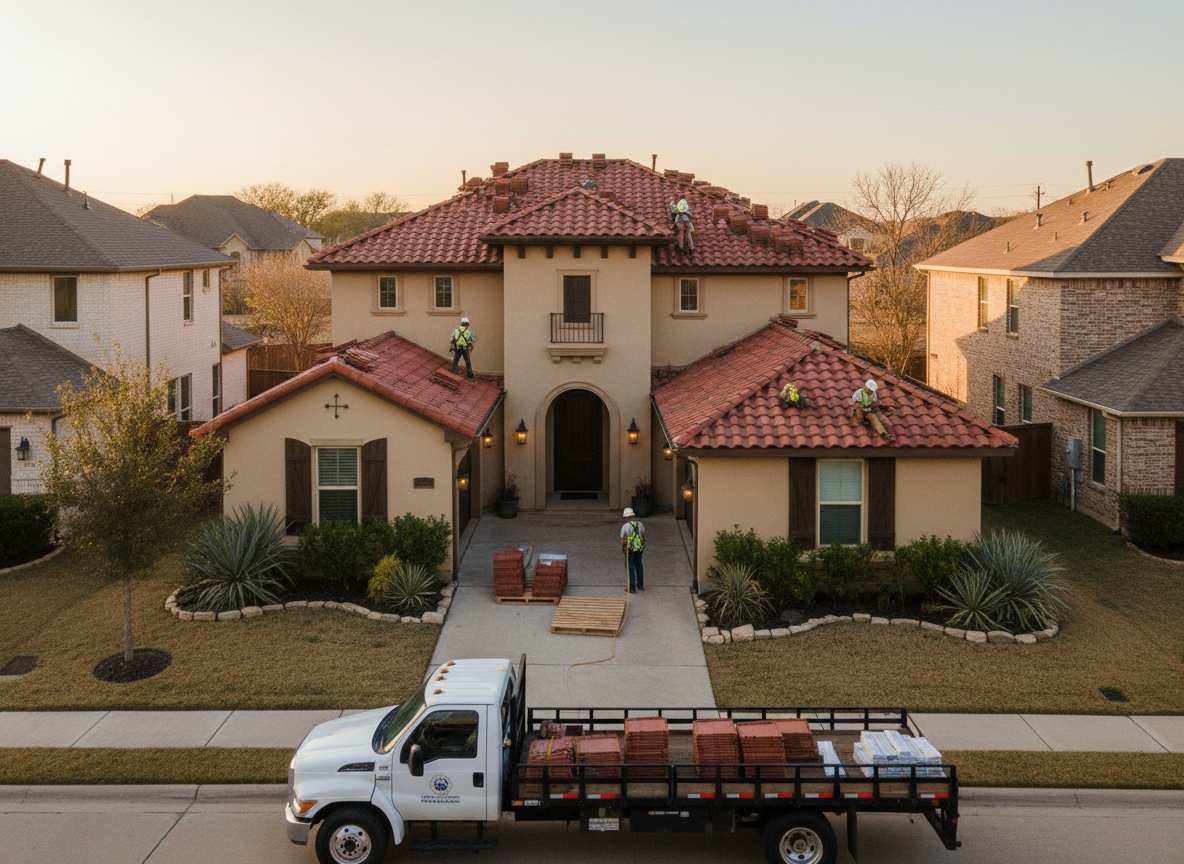
Roof Repair and Roof Replacement Help Across Texas
Texas Roof Specialists helps Texas homeowners connect with independent roofing contractors for roof repair, replacement, installation, leak investigation, inspections, maintenance, and storm or hail damage repairs. Ask the independent provider about service availability, roofing materials, pricing, credentials, and scheduling for your location.
Roof Repair Services Across Texas
Roof Repair
Roof repair for Texas homes and low-slope buildings, from leak tracing and flashing fixes to shingle… Roof repair pricing in Texas depen.
Roof Replacement
Roof replacement for Houston-area homes and properties — asphalt shingle, metal, tile and low-slope … Roof replacement pricing in the Ho.
Roof Installation
Roof installation for Houston-area homes and commercial buildings — new roofs, tear-offs and re-roof… Roof installation pricing in the H.
Roof Leak Repair
Roof leak repair for Houston-area homes and properties — tracing the actual source of the water, rep… Roof leak repair pricing in the Ho.
Storm Damage Roof Repair
Storm Damage Roof Repair for Texas homes hit by hail, straight-line wind and heavy rain. We assess b… Storm damage repair pricing in the.
Residential Roofing
Texas Roof Specialists connects homeowners across Houston and the surrounding suburbs with residenti… Residential roofing pricing in the.
Roofing Connections for Homeowners Across Texas
Texas Roof Specialists is a statewide roofing service-connection brand built for homeowners who need roof work done right — without the guesswork of finding a contractor on their own. From our Houston home base, we help Texas homeowners connect with independent local roofing contractors for roof repair, roof replacement, new roof installation, leak diagnosis and repair, roof inspections, ongoing maintenance, storm and hail damage claims, and material-specific roofing such as asphalt shingle, metal, tile, and low-slope or flat systems. We hold RCAT certification, and we work with independent contractors who are locally owned and owner-operated in the communities they serve.
Roofing in Texas is not one job — it is many. Along the Gulf Coast, hot humid summers and mild winters mean roofs take a beating from heat, moisture, and algae growth, while hail, straight-line winds, and the occasional tropical system hit homeowners from the Panhandle down to the Rio Grande Valley. Whether you are dealing with a slow ceiling stain after a spring storm, granule loss on a twenty-year-old shingle roof, or a full replacement after a hailstorm, our role is to match your project with a local contractor who handles that kind of work, in your part of the state, on your material.
Roof Repair and Roof Replacement, Connected Across Texas
Texas Roof Specialists is a statewide roofing service-connection website. We provide roofing information and help homeowners contact independent providers who can discuss repair, replacement and inspection needs.
Check Provider Credentials
Ask the independent roofing provider directly about insurance, references, relevant credentials and any local registration requirements before agreeing to work.
Texas-Focused Information
Explore roofing service information for Texas, including regional weather considerations. Confirm local coverage and availability with the independent provider.
Discuss Urgent Roofing Needs
If you have storm damage or an active leak, explain the urgency when calling. The independent provider confirms whether and when help is available.
Local Permit Awareness
Roofing permits vary by city and county. Ask your provider and local building department which requirements apply to your address.
Call About Roofing Services
Call to discuss the roofing issue and request a connection with an independent service provider. Availability is not guaranteed.
Repair and Replacement Information
Learn about repair and replacement considerations before discussing suitable options with an independent roofing provider.
What to expect, start to finish
Reach Out and Describe What You're Seeing
Start by telling us what caught your attention — a brown ring spreading on the ceiling, shingle tabs in the yard after a wind event, granules collecting at the bottom of downspouts, a soft spot under the eaves, or daylight showing through attic decking. Photos of the roof from the ground and of any interior staining help the conversation move faster. If you are dealing with an active leak, a tree impact, or damage from a recent hail or wind storm, explain the urgency when contacting a provider and confirm whether emergency assistance is available. We are a statewide service-connection brand, so ask the independent provider whether they work in your part of Texas, whether that is the Gulf Coast, the Hill Country, the Panhandle, or a Dallas–Fort Worth suburb.
Get a Roof Assessment and a Written Scope of Work
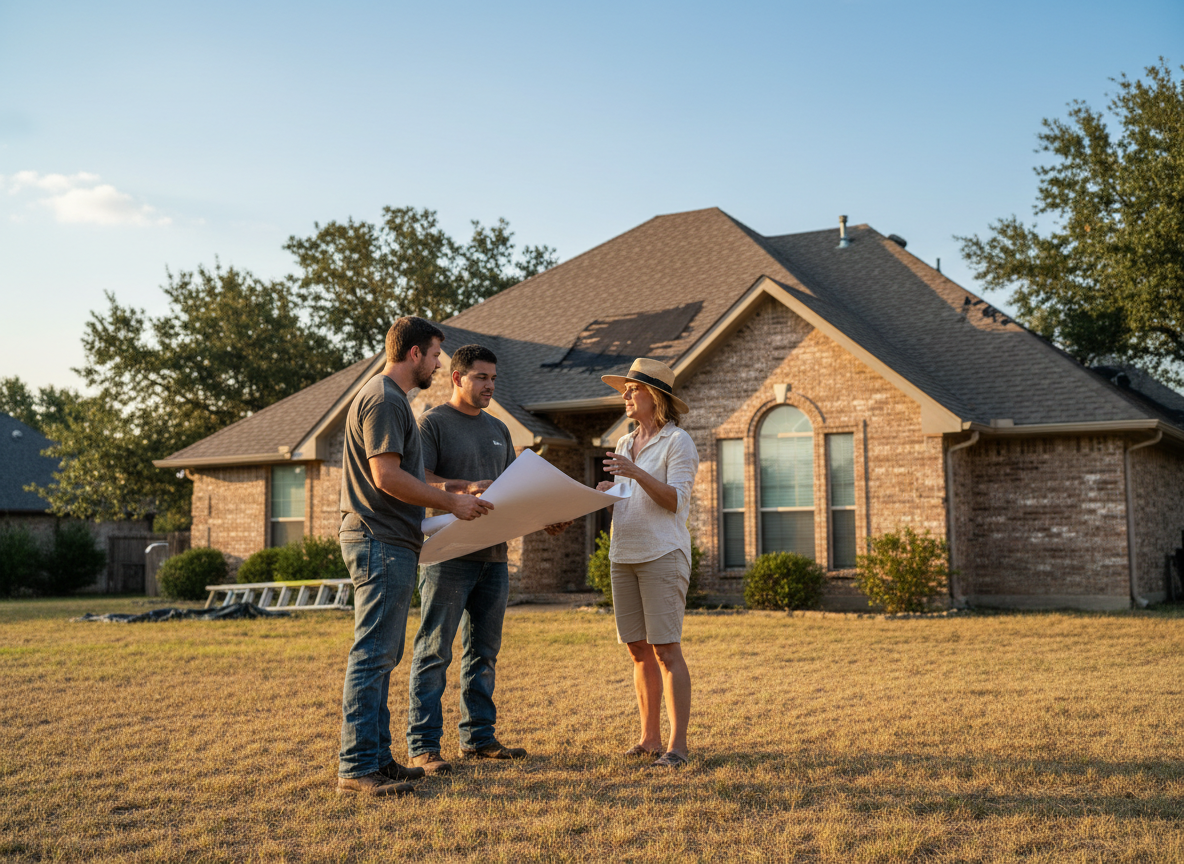
A roofing professional comes out to evaluate the roof system as a whole, not just the spot you noticed. That typically means walking the roof where it is safe to do so, checking ridge caps, valleys, pipe boots, chimney and skylight flashing, drip edge, and step flashing, plus inspecting the attic side for staining, matted insulation, or darkened decking that signals long-term moisture. After major hail or wind, the assessment also looks for bruised or fractured shingle mats, dented soft metals, and granule loss that may not be visible from the driveway. You should receive a written scope describing what was found, which areas are repairable, and whether the damage has moved into replacement territory. Ask how long the assessment takes and whether the findings will be documented with photos you can keep.
Review Repair vs. Replacement, Materials, and Cost Factors
If the damage is isolated — a torn section of shingles, a failed pipe boot, a leak at a valley — a targeted repair is often the sensible first move. If shingles are brittle across multiple slopes, if the roof is at or near the end of its service life, or if a storm hit most of the same elevation, replacement is usually the better long-term decision. Texas roofs face very different pressures depending on where you live: intense UV and heat in West Texas, hail corridors through North Texas and the Panhandle, wind-driven rain and humidity along the coast, and the hard freezes that have swept the state in recent winters. Material choices follow from that — architectural asphalt shingles, standing-seam metal, tile, or low-slope systems such as TPO or modified bitumen — along with underlayment, ventilation, and flashing details. Cost depends on roof size and pitch, how many layers must be torn
Schedule the Work, Then Walk the Finished Roof
Once you approve the scope, the work gets scheduled based on material availability, weather windows, and crew capacity — timelines can shift after a widespread storm when many homeowners in the same area are filing claims at once. On installation day, expect tear-off of the old material where applicable, inspection and replacement of any rotted decking, then underlayment, flashing, and the new roof system, followed by a magnet sweep for nails and haul-away of debris. Before the crew leaves, walk the property with the person in charge: check gutters and downspouts, confirm ridge lines and penetrations look clean, and make sure the site is clear. Keep the written scope, material documentation, and any permit paperwork together — they are useful if you file an insurance claim or sell the home later.
Cities we serve
Roof Repair Across Texas — Cities We Serve
Harris · Subtropical climate with hot humid summers and mild winters.
Good to know
Roof Repair FAQs — Texas
Still have questions? We're happy to talk it through.
+1 888-510-7834