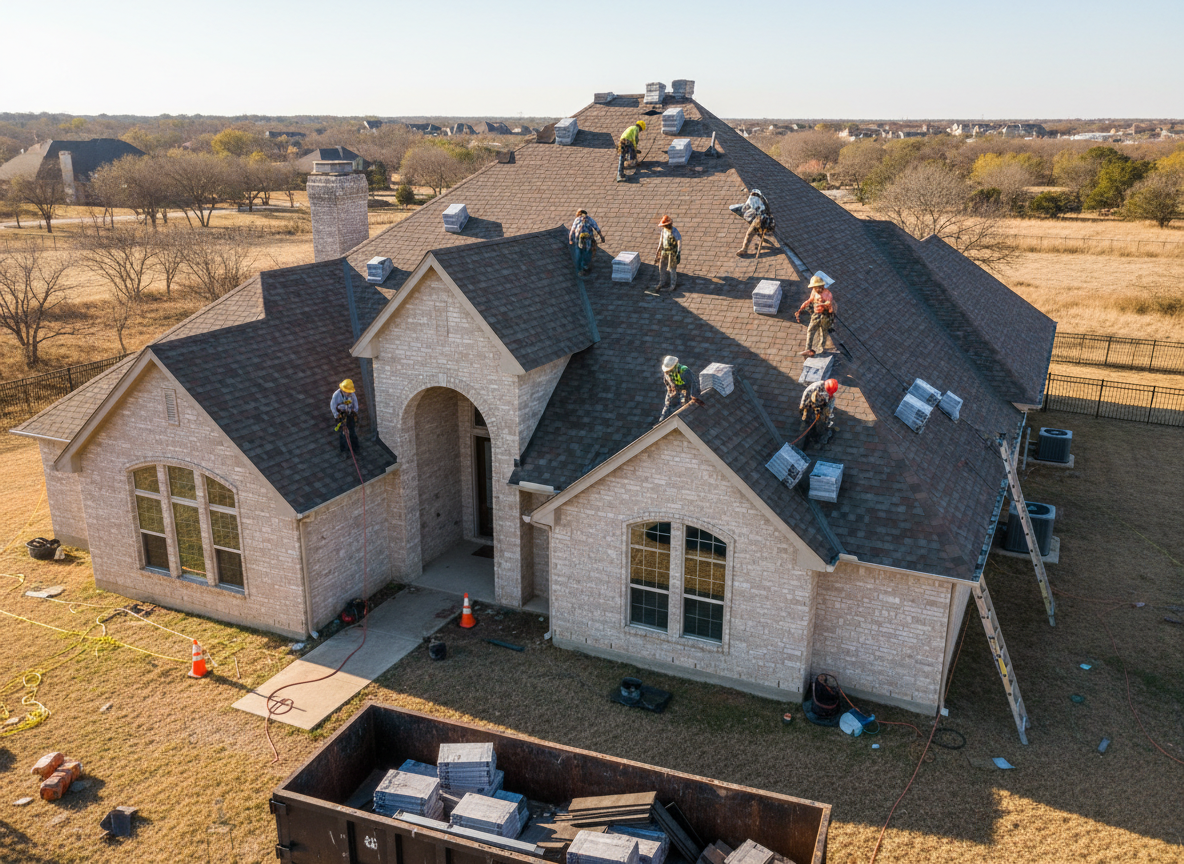
Asphalt shingle roofing is the most common roof system across Houston and the surrounding communities, from older bungalows in the Heights and Montrose to larger homes in River Oaks, Midtown, Downtown, Katy, Sugar Land, and Pearland. The local climate is subtropical: hot, humid summers, mild winters, and repeated heavy rain, wind, and hail events. That mix puts asphalt shingles under constant stress. UV radiation cooks the shingle mat, humidity feeds algae and moss, and storm-driven rain finds weak points at valleys, pipe boots, chimney flashing, and roof-to-wall intersections. Near landmarks such as the Houston Zoo, Museum of Fine Arts, Minute Maid Park, and Space Center Houston, tree canopy and urban runoff can also affect roof performance. A roof repair or roof replacement plan should be built around those local realities, not a generic national checklist.
Common asphalt shingle failure modes in Houston include granule loss, curling, cracking, blistering, and thermal splitting. Heat buildup in attics accelerates shingle aging from below, while heavy rain exposes flashing defects that may stay hidden during dry spells. Thunderstorm wind can lift tabs and break sealant lines, and hail can bruise shingles in a way that is not always obvious from the ground. In older neighborhoods like the Heights and Montrose, layered roofs and aged decking are frequent complications. In newer suburbs like Katy, Sugar Land, and Pearland, installation details, ventilation, and builder-grade materials often determine how soon repairs are needed. Algae streaking is common in humid shade, and it is often cosmetic, but it can also signal prolonged moisture. A proper inspection separates surface wear from active water intrusion.
Repair versus replacement depends on age, slope, deck condition, number of shingle layers, and how widespread the damage is. A single missing shingle or failed pipe boot may be a straightforward roof repair. Widespread granule loss, multiple leaks, soft decking, or storm damage across several slopes usually points toward roof replacement. Asphalt shingles are appropriate on steep-slope roofs, typically 4:12 and above, and on many residential and light-commercial buildings where the structure and underlayment are sound. They are not the right choice for flat or low-slope roofs, which need a membrane system such as TPO or modified bitumen. Ventilation, underlayment, and flashing quality matter as much as the shingle itself in Houston's heat and humidity.
Material choices include architectural laminated shingles, which are the standard for most Houston-area replacements, and impact-resistant shingle options where hail risk justifies the upgrade. Synthetic underlayment, peel-and-stick membrane at valleys and penetrations, new pipe boots, and corrosion-resistant flashing help manage heavy rain. Ridge vents and balanced intake ventilation reduce attic heat and moisture. For partial repairs, matching existing shingles can be difficult because dye lots and weathering change appearance; a roofing professional should explain whether a repair will blend or remain visible. Permits for roof repair or roof replacement vary by municipality, so confirm requirements with the local building department before work begins. Texas Roof Specialists is a statewide service-connection brand; the installing contractor should provide a written scope, material details, and cleanup plan.
What Often Goes Wrong With Asphalt Shingles in Houston
Houston roofs face a specific combination of heat, humidity, wind, and heavy rain. Watch for these symptoms:
- Granule loss in gutters or at downspout splash areas
- Curling, clawing, or cracked shingle tabs
- Missing or lifted shingles after a thunderstorm
- Rusted or loose chimney, wall, and valley flashing
- Cracked pipe boots and vent seals
- Dark algae streaks on north- and shade-facing slopes
- Attic-side staining, damp decking, or daylight visible through the roof line
- Soft spots underfoot that suggest decking deterioration
Not every symptom means the whole roof is failing, but each one deserves a closer look before the next heavy rain.
Repair or Replacement? How to Decide
A focused roof repair makes sense when damage is limited to a slope, penetration, or flashing detail and the surrounding shingles still have usable life. Roof replacement becomes more reasonable when the roof is near the end of its service life, has multiple active leaks, shows widespread granule loss or cracking, has soft decking, or has already been layered over once. In Houston, attic ventilation and past storm history often tip the decision. A contractor should show you the problem areas, explain what can be repaired, and separate urgent water-entry issues from cosmetic wear. If the roof is flat or very low-slope, asphalt shingles are not the correct system; ask about a membrane roof instead.
Permits and Local Rules Across Houston-Area Municipalities
Permit rules can vary by municipality and by the scope of work. A full roof replacement, structural decking repair, or certain storm-related rebuilds may require a permit in one city and follow a different process in another. Minor repairs may be handled differently depending on local code and homeowner association rules. Before work begins, confirm requirements with the local building department for your address. If the home is in a historic district, such as parts of the Heights or Montrose, there may be additional design or material review. The written proposal should clarify who is pulling any required permit and what inspections are expected.
What to Discuss With Your Roofing Contractor
Use this checklist when reviewing an asphalt shingle roofing proposal:
- Is the scope a repair or a full replacement, and what exactly is included?
- What shingle brand, product line, and color are proposed?
- What underlayment, valley membrane, and flashing materials will be used?
- How will attic intake and exhaust ventilation be balanced?
- Will any decking be replaced, and how is that priced if found during tear-off?
- How will pipe boots, chimney flashing, and roof-to-wall details be sealed?
- What is the cleanup plan, including magnetic sweep for nails?
- Are permit requirements confirmed with the local municipality?
- For partial repairs, how closely can new shingles match the existing roof?
- Ask whether the installing crew holds RCAT Certification or other relevant training, and verify current credentials directly.
How We Approach Diagnosis and Inspection
A useful asphalt shingle inspection starts with the leak history and the attic, not just the roof surface. We look for ceiling stains, rafter staining, damp insulation, and daylight at penetrations. On the roof, we check shingle field condition, ridge and hip details, valleys, chimney and wall flashing, pipe boots, vents, and visible decking. Where safe, we photograph problem areas and explain whether the issue is active or old. The goal is to trace water to its entry point and distinguish a roof repair from a roof replacement. If the roof is low-slope or has complex transitions, we note where asphalt shingles are not appropriate and what system would perform better.
Cost Factors for Asphalt Shingle Roofing in Houston
Pricing is not one-size-fits-all. The main cost factors include roof size and slope, number of layers to remove, decking condition, flashing complexity, ventilation upgrades, shingle grade, and whether the job is a repair or a full replacement. Storm damage can add scope if multiple slopes, vents, or flashing details are affected. Disposal fees and permit costs may or may not be included in a proposal. Ask for a written scope that separates labor, materials, decking allowances, and any optional upgrades. A lower number is not meaningful if it excludes underlayment, flashing, or cleanup.
Seasonal and Storm Guidance
Houston's storm season can bring hail, high wind, and intense rain, while summer heat and humidity work on shingles year-round. After a significant storm, check the yard and gutters for shingle pieces and granules, look for lifted tabs from the ground, and inspect the attic for new stains. Avoid walking the roof yourself, especially when it is wet or steep. Schedule a professional assessment before filing anything or authorizing repairs, and keep photos of any interior or exterior damage. Routine maintenance—clearing valleys, trimming tree limbs, and checking flashing—can reduce the chance that a small issue becomes a ceiling leak.
Technician insight
In Houston, the thing that catches most people out with asphalt shingle roofing is that a leak over a living room in the Heights or Montrose often starts at a valley, pipe boot, or chimney flashing—not in the field of shingles. The second surprise is how much attic ventilation and decking condition affect shingle life in our humid, hot climate; a roof that looks fine from the street can have soft decking near a ridge vent or algae streaking from prolonged moisture. I always check attic-side staining and flashing details before quoting a repair.
Historic Heights Bungalow Leak at Chimney Flashing
A homeowner noticed a ceiling stain after a heavy rain and assumed the whole roof needed replacement. Inspection showed the shingle field was worn but still serviceable, while the chimney counterflashing was rusted and the sealant had failed, allowing water to track along the masonry. We replaced the damaged flashing, swapped out the surrounding shingles, and installed new underlayment at the transition. The leak stopped after subsequent storms, and the homeowner avoided a full replacement for the time being.
Asphalt Shingle Roofing Services We Offer
✓Asphalt Shingle Roof Repair
Targeted repair for missing, cracked, or wind-lifted shingles, plus localized leaks around penetrations and valleys.
✓Asphalt Shingle Roof Replacement
Full tear-off and replacement of worn or storm-damaged steep-slope roofs with new underlayment, flashing, and ventilation details.
✓Hail and Wind Damage Roof Repair
Assessment and repair of shingle bruising, granule loss, torn tabs, and sealant failure after Houston-area storms.
✓Roof Leak Detection and Flashing Repair
Tracing active leaks to chimney, wall, valley, vent, and pipe-boot flashing, then repairing the source rather than only the stain.
✓Attic Ventilation and Ridge Vent Service
Improving intake and exhaust ventilation to reduce attic heat and moisture that shorten asphalt shingle life.
✓Roof Decking and Underlayment Replacement
Replacing soft or delaminated decking and failed underlayment before new shingles are installed.
✓Shingle Matching and Partial Roof Replacement
Replacing damaged slopes or sections while discussing realistic color and texture matching with existing shingles.
How it works
- 1
Roof Assessment and Leak Tracing
We review the roof from the ground, attic, and roof surface where safe, checking shingles, flashing, decking, ventilation, and prior repairs. Active leaks are traced to the source, not just the ceiling stain.
- 2
Scope and Material Planning
You receive a written scope that separates repair from replacement, identifies shingle and underlayment options, and notes decking or flashing work that may be needed. Permit requirements are confirmed with the local municipality.
- 3
Repair or Replacement Installation
Crews remove damaged materials, install underlayment and flashing details, set new shingles, and address ventilation. For repairs, the goal is a watertight tie-in with existing roofing.
- 4
Final Inspection and Homeowner Walkthrough
The roof is checked for nail placement, flashing integration, ridge and vent details, and cleanup. You review the completed work and any maintenance notes for the coming storm season.
Pricing
Pricing depends on roof size and slope, number of layers to remove, decking condition, flashing complexity, ventilation upgrades, shingle grade, and whether the job is a repair or full replacement. Storm damage can add scope. Ask whether permit fees, disposal, and decking repairs are included in the written proposal.