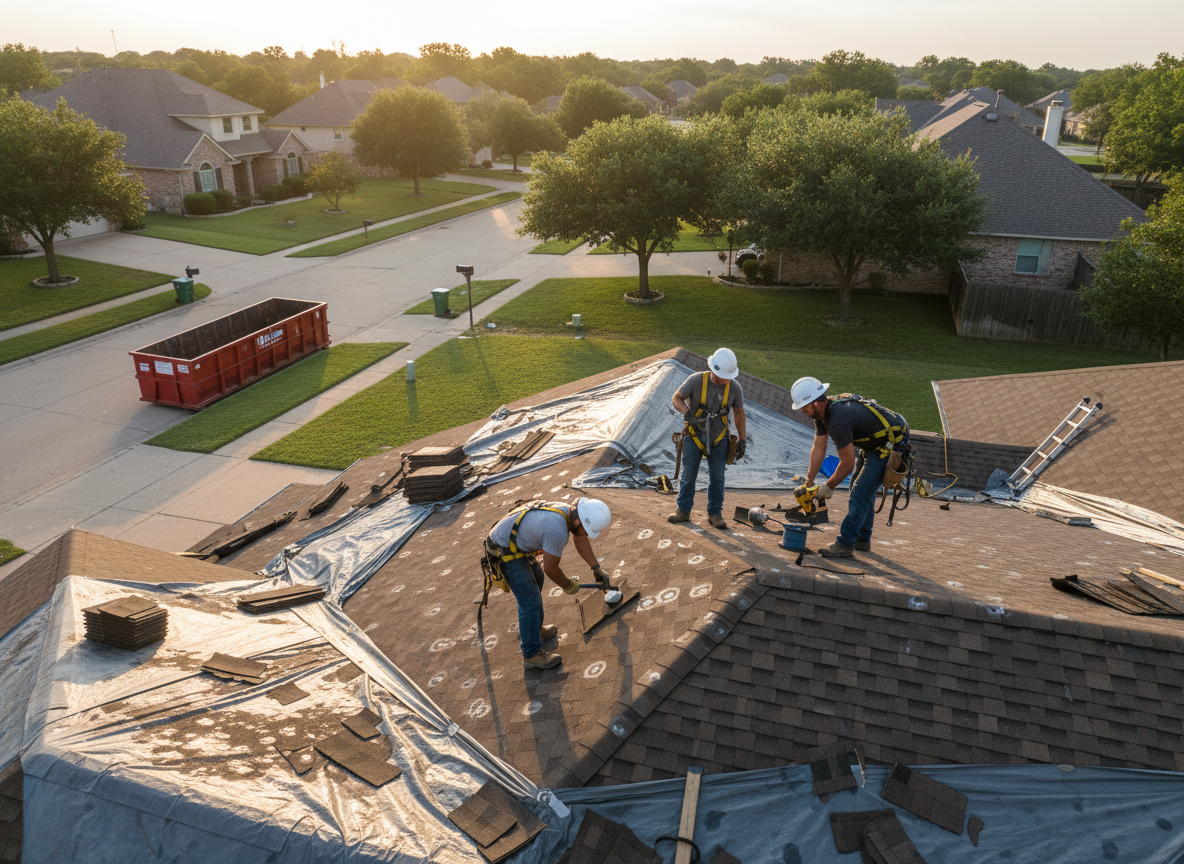
Hail Damage Roof Repair in Houston starts with understanding how hail actually behaves here. A storm that drops marble-sized hail over Katy, Sugar Land, or Pearland may leave almost no visible marks from the street, while a shorter burst over the Heights, Montrose, or River Oaks can bruise shingle mats, crack tile, and dent metal vents. Because the Houston area sits in a subtropical climate with hot humid summers and mild winters, the roof is already working against heat, UV, and moisture before hail arrives. The repair question is not only whether shingles are missing; it is whether the roof still has a reliable water-shedding surface after impact.
The most common mistake is treating hail damage as a cosmetic issue. On asphalt shingles, hail can knock granules loose, fracture the mat, and create soft spots that are hard to see from the ground. On metal roofs, dents may look minor but can loosen fasteners or distort panels. Tile roofs can crack or chip, and flat or low-slope systems such as TPO or modified bitumen can be punctured or have seams stressed. In Houston's humidity, any opening or compromised flashing gives moisture a path into the decking, attic, and ceiling. That is why a proper Hail Damage Roof Repair scope should include attic inspection, flashing checks, and moisture readings, not just a count of damaged shingles.
Texas Roof Specialists is a statewide roofing service-connection brand serving homeowners. We help you sort the repair conversation before you commit to a contractor: what was damaged, what can be repaired, what may point toward roof replacement, and what local permits or HOA rules may apply. Hail in Texas often arrives with severe thunderstorms, heavy rain, and wind, so the same event can cause multiple failure modes. A roof that looks intact from the driveway may have damaged ridge caps, vents, skylights, or valley flashing. If you are near Downtown, Midtown, the Museum of Fine Arts, or Minute Maid Park, the mix of older housing stock and tight lot access can also change how a repair is staged.
Repair versus replacement is rarely a yes-or-no call. If damage is isolated to one slope, a few shingle fields, or specific flashing details, a targeted repair can make sense. If hail has bruised shingles across multiple slopes, if the roof is already near the end of its service life, or if repeated leaks have damaged decking, roof replacement may be the more practical path. Permits can vary by municipality, so confirm requirements for the specific job address before work begins. The goal is a clear scope: repair what is damaged, correct what is causing leaks, and avoid replacing a roof that still has useful service life.
Symptoms And Failure Modes After Hail
Hail damage does not always announce itself with a missing shingle. In the Houston area, look for these common signs:
- Dented gutters, downspouts, vents, and metal flashing.
- Granule loss collecting in gutters or at downspout outlets.
- Bruised or soft spots on asphalt shingles that look intact from the ground.
- Cracked, chipped, or displaced clay and concrete tiles.
- Dented or seam-stressed metal roof panels and fasteners.
- Punctures, tears, or stressed seams on TPO and modified bitumen low-slope membranes.
- Ceiling stains, attic moisture, or musty odors after heavy rain.
- Lifted or torn flashing around chimneys, skylights, and roof-to-wall transitions.
Because Houston's subtropical climate keeps humidity high, a small hail breach can stay wet and affect decking, insulation, and attic framing long after the storm has passed.
Roof Systems And Materials
Asphalt shingle roofs are common across Houston, Katy, Sugar Land, and Pearland. Hail can bruise the mat, knock off granules, and crack tabs. Repair usually means replacing damaged shingle fields, matching the existing shingle as closely as possible, and checking underlayment beneath the impact area. If the shingle is old, brittle, or discontinued, matching may be limited, and broader replacement should be discussed.
Metal roofs can dent from hail, and while a dent may not leak immediately, it can loosen fasteners, distort panels, or stress seams. Repair may involve panel replacement, fastener correction, or seam sealing. Metal is often appropriate where impact resistance and longevity matter, but repair decisions depend on the panel profile and whether the metal is standing seam, corrugated, or another system.
Tile roofs, including clay and concrete, can crack or chip on impact. The tile surface may hide damage to the underlayment below, so a tile repair should include inspection of the underlayment and flashing before new tiles are set. Tile is not appropriate for every slope or structural budget, and walking a tile roof incorrectly can cause more damage than the hail did.
TPO, modified bitumen, and other low-slope systems are typically commercial or flat-roof applications. Hail can puncture the membrane, stress seams, or damage insulation below. Repair often involves compatible patches, heat-welded seams, or localized membrane replacement. If the membrane is old, brittle, or waterlogged, repeated patching may not be appropriate. Coatings and waterproofing can extend the life of some low-slope roofs, but they are not a substitute for structural repairs or membrane replacement when the system has failed.
Diagnosis And Inspection Considerations
A hail damage inspection should go beyond the roof surface. Contractors may mark test squares on slopes to check for bruising, photograph dents and granule loss, and compare damaged areas against unaffected slopes. In the attic, look for daylight, water staining, soft decking, and damp insulation. Check valleys, vents, chimney flashing, skylights, and roof-to-wall transitions, since these details often fail before the main roof field.
Permit rules can vary by municipality and by the scope of work. Some repairs may not require a permit, while larger repairs or roof replacement may. Confirm requirements with the local building department for the specific job address. If the home is in an HOA, review architectural rules before changing visible roofing materials or colors.
Repair Vs. Replacement Factors
Several factors push the decision toward repair or replacement:
- Extent of damage: isolated impact areas often point to repair; widespread bruising across multiple slopes may point to replacement.
- Roof age and condition: a roof near the end of its service life may not justify a large repair.
- Material availability: discontinued shingles, tile profiles, or metal panels can make matching difficult.
- Decking and underlayment: soft decking or failed underlayment may require more than surface repair.
- Leak history: repeated leaks or active moisture intrusion can signal deeper problems.
- Slope and access: steep roofs, tight lots, and multi-story homes can affect repair feasibility and cost.
- Local requirements: permits, HOA rules, and disposal rules can shape the scope.
The right answer is the one supported by inspection findings, not a blanket rule.
Texas Heat, UV, Wind, Hail, And Heavy Rain
Texas roofs face a combination of stressors. Houston's subtropical climate brings hot humid summers and mild winters, and UV exposure ages shingles, tile, and coatings year-round. Hail often arrives with severe thunderstorms, and the same storm can drive wind that lifts flashing and heavy rain that finds any weak point. From the Houston Zoo area to Space Center Houston, and from Downtown and Minute Maid Park out toward Katy, Sugar Land, and Pearland, storm cells can move quickly and affect neighborhoods differently.
Heat and humidity also slow drying after a leak. A hail bruise that might stay dry in a drier climate can stay damp in Houston, increasing the risk of decking rot, attic condensation, and ceiling stains. That is why repair scopes should include moisture assessment where intrusion is suspected, not just replacement of visible damaged material.
What To Discuss With The Contractor
Before work begins, ask these questions:
- What did the inspection find, and can I see photos of the hail-related damage?
- Which areas can be repaired, and which areas may need roof replacement?
- How will you match existing shingles, tile, metal, or membrane materials?
- Will you check underlayment, decking, flashing, and attic moisture?
- What permit or HOA requirements apply to my address?
- How will nails and debris be cleaned up after the work?
- What workmanship or material warranty is offered in writing?
- Ask whether the contractor holds RCAT certification or other relevant training, and confirm the scope of that credential.
Clear answers help you compare scopes rather than just prices.
Cost Factors
Hail damage roof repair pricing depends on roof size, pitch, access, material, extent of damage, decking condition, and whether repairs are isolated or widespread. In Houston, two-story homes, steep pitches, tile or metal systems, and hidden underlayment damage can raise labor and material costs. Permit fees, disposal costs, and material matching costs should be confirmed with the contractor before work begins. A written scope that separates repair items from replacement considerations makes it easier to understand what you are paying for.
Technician insight
In Houston, the thing that catches most people out with Hail Damage Roof Repair is that the damage often is not a clean hole you can see from the driveway. Our subtropical humidity means a bruised shingle or lifted flashing that looks minor can let water into the decking and attic, especially on older homes in the Heights, Montrose, and River Oaks where roof layers and ventilation vary. Homeowners also sometimes mistake granule loss from age and UV for hail damage, so the inspection has to separate storm impact from ordinary wear before anyone talks about repair versus replacement.
Hail Bruising And Valley Leak Near The Heights
After a spring hailstorm near the Heights, a homeowner noticed dents in the gutters and a ceiling stain in a back bedroom. The inspection found cracked shingle tabs and bruised mat on the west slope, plus a lifted valley flashing that had been leaking into the decking. We scoped a targeted repair: replace damaged shingles, reset and seal the valley flashing, replace the affected underlayment section, and check the attic for moisture. The ceiling stain was monitored after the repair, and the roof passed a follow-up water test at the repaired area.
Hail Damage Roof Repair Services We Offer
✓Asphalt Shingle Hail Damage Repair
Repair bruised, cracked, or granule-depleted asphalt shingles after hail impact. This is often appropriate when damage is limited to specific slopes or shingle fields and the existing roof is otherwise sound.
✓Metal Roof Hail Damage Repair
Address dented panels, loosened fasteners, and damaged seams on metal roofing. Repair may involve panel replacement, fastener correction, or seam sealing depending on the metal system and extent of impact.
✓Tile Roof Hail Damage Repair
Replace cracked or chipped clay or concrete tiles and check underlayment beneath impact areas. Tile roofs can hide damage below the surface, so underlayment and flashing should be inspected before closing the repair.
✓Flat and Low-Slope Roof Hail Damage Repair
Repair punctures, seam stress, and membrane damage on TPO, modified bitumen, and other low-slope systems. This work is typically commercial or low-slope focused and should not be treated like residential shingle repair.
✓Roof Leak Diagnosis After Hail
Trace active or intermittent leaks that appear after a hailstorm, including ceiling stains, attic moisture, and wall stains. Diagnosis may involve water testing, moisture meters, and inspection of valleys, vents, and penetrations.
✓Storm-Damaged Flashing and Vent Repair
Repair or replace dented, lifted, or sealed flashing around chimneys, skylights, vents, and roof-to-wall transitions. Hail and wind often damage these details even when the main roof field looks intact.
✓Roof Deck and Underlayment Repair
Replace damaged decking or underlayment exposed by hail, wind, or water intrusion. This is often needed when leaks have been ongoing or when shingles and tiles are removed during repair.
How it works
- 1
Roof And Attic Assessment
Inspect the roof surface, flashing, vents, and attic for signs of hail impact, moisture, and previous repairs. Document visible damage and note areas that need closer testing.
- 2
Damage Mapping And Moisture Check
Mark or photograph affected slopes, test for bruised shingles or membrane damage, and use moisture readings where leaks are suspected. Compare damaged areas against unaffected sections.
- 3
Repair Scope And Material Matching
Define which areas can be repaired and which may point toward roof replacement. Confirm how existing shingles, tile, metal, or low-slope membrane will be matched.
- 4
Permit And HOA Confirmation
Confirm whether the specific job address requires a municipal permit or HOA approval. Requirements can vary by city and by the size of the repair.
- 5
Repair, Cleanup, And Final Review
Complete the agreed repair, replace damaged underlayment or decking as needed, and clean up nails and debris. Review the finished work and any follow-up moisture checks.
Pricing
Hail damage roof repair pricing depends on roof size, pitch, access, material, extent of damage, decking condition, and whether repairs are isolated or widespread. In Houston, two-story homes, steep pitches, tile or metal systems, and hidden underlayment damage can raise labor and material costs. Confirm permit fees, disposal costs, and material matching costs with the contractor before work begins.