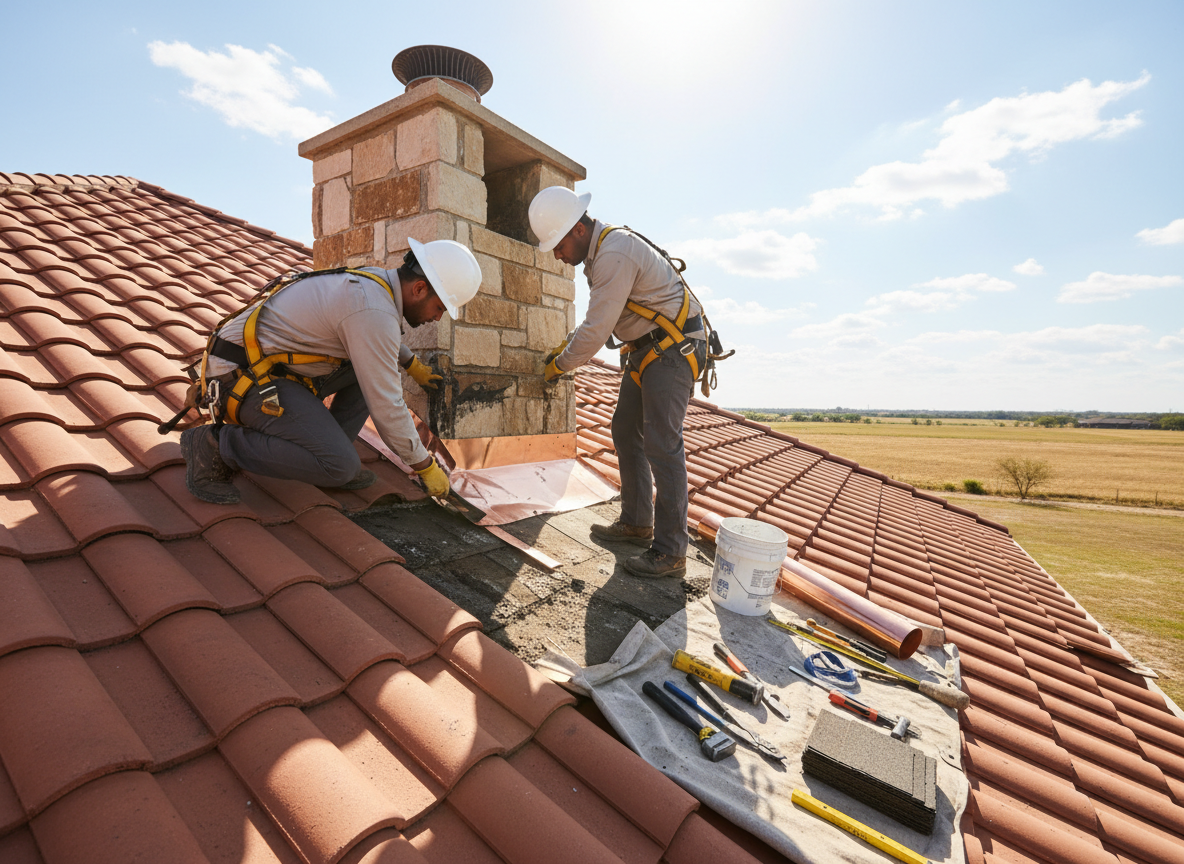
Roof Flashing Repair in Houston: The Critical Leak Defense
Flashing is the metal or membrane material that seals roof transitions—chimneys, valleys, vent pipes, skylights, and wall intersections. In Houston's subtropical climate, hot humid summers and mild winters might seem gentle, but the real stress comes from intense UV, heavy rain, hail, and wind-driven storms. These conditions degrade sealants, loosen fasteners, and corrode metal. From the Heights and River Oaks to Montrose, Midtown, Downtown, Katy, Sugar Land, and Pearland, flashing failures are a leading cause of roof leaks. Texas Roof Specialists connects you with local roof repair professionals, including those who hold RCAT certification. Whether you need targeted roof repair or are weighing roof replacement, addressing flashing correctly is essential to protect your home.
Symptoms and Failure Modes of Failing Roof Flashing
Water stains on ceilings or walls, especially after heavy rain, often point to flashing. You might see rusted, lifted, or missing flashing; cracked or peeling sealant; loose or missing fasteners; or corrosion where dissimilar metals meet. In Houston, thermal expansion and contraction from intense sun and occasional freezes can work fasteners loose. Wind uplift during storms can peel back flashing, and hail can dent or puncture metal. UV radiation breaks down sealants quickly, leaving gaps that wind-driven rain exploits. Debris like leaves and granules can trap moisture, accelerating rust. A leak may appear far from the actual breach, so diagnosis requires a thorough inspection. Ignoring these symptoms can lead to rot, mold, and costly structural damage.
Roof Systems and Materials: How Flashing Repair Differs
Asphalt shingle roofs—common in Katy, Sugar Land, and Pearland—use step flashing at walls and valley flashing at intersections. Repair involves carefully removing shingles to replace damaged flashing, then re-shingling. Metal roofs, popular for durability, expand and contract dramatically; flashing must allow movement, and repairs require specialized clips and sealants—not a DIY job. Tile roofs, seen in some Houston neighborhoods, have concealed flashing that must match the tile profile; broken tiles and failed underlayment are common. TPO and other flat/low-slope membranes, found on commercial buildings near Downtown and the Museum of Fine Arts, rely on heat-welded seams and termination bars; flashing repair here means proper membrane patching, not residential shingle techniques. Coatings can extend flat roof life but won't fix failed flashing. Waterproofing details around decks and balconies may integrate with flashing repair. When corrosion is severe or the deck is compromised, replacement may be the better path.
Repair vs. Replacement: Factors for Roof Flashing
Deciding between flashing repair and roof replacement depends on several factors. If your roof is relatively young and the damage is isolated to flashing, a targeted repair is usually the most sensible approach. But if the roof is near the end of its expected life, or if flashing failures are widespread after a hail or wind event, replacement may be more cost-effective in the long run. Consider the condition of surrounding shingles or membrane, the integrity of the roof deck, and whether multiple leak points exist. In Houston, repeated storms can accelerate wear. A local roofer can assess whether flashing can be replaced independently or if the system needs broader work. Always confirm local permit requirements, as they vary by municipality. We don't guarantee insurance claims, but we can help you document damage.
Local Permits for Roof Flashing Repair in Texas
Permits for roofing work—including flashing repair—vary by municipality across Texas. The City of Houston, Katy, Sugar Land, Pearland, and other jurisdictions each have their own requirements. Some may require a permit for any roof repair, while others only for structural work or full replacements. Before work begins, ask your contractor who is responsible for pulling permits and whether inspections are required. Texas Roof Specialists connects you with local professionals who can help you navigate these local rules. Always confirm with your city's building department to ensure compliance.
Prevention and Seasonal Guidance for Houston Roofs
Houston's storm season—typically spring and fall—brings heavy rain, hail, and high winds. After any major storm, inspect your roof from the ground for missing flashing, lifted shingles, or debris. Keep gutters clear to prevent water backup that can rot flashing. Schedule a professional roof inspection annually, especially if your home is in an older neighborhood like the Heights or Montrose, where original flashing may be nearing the end of its life. UV degradation is constant, so sealants should be checked. Addressing small flashing issues promptly can prevent interior water damage and extend the life of your roof. While you can't control the weather, proactive maintenance helps.
Technician insight
In Houston, the thing that catches most people out with roof flashing repair is that the leak almost never shows up directly below the flashing. Water travels along rafters and decking, so a stain on a ceiling near the Museum of Fine Arts or in a Heights bungalow might actually come from a chimney flashing failure twenty feet away. Homeowners often seal the visible crack and miss the real source. Also, our intense UV and occasional freezes mean sealants that work elsewhere fail here in a couple of seasons—so proper metal flashing, not just caulk, is what lasts.
Chimney Flashing Leak in a River Oaks Home
A homeowner noticed water staining on the ceiling near the chimney after a heavy rain. Inspection revealed that the original chimney flashing had corroded and pulled away from the masonry, allowing water to enter. We removed the old flashing, installed new step and counterflashing with proper overlaps, and sealed it with a UV-resistant sealant. The ceiling stain was monitored and no further leaks occurred after subsequent storms.
Roof Flashing Repair Services We Offer
✓Chimney Flashing Repair
Repair or replace the flashing that seals the gap between your chimney and roof, a common leak point in Houston's heavy rains.
✓Valley Flashing Repair
Fix valley flashing where two roof planes meet, critical for directing water away in high-volume rain events.
✓Vent Pipe and Boot Flashing Repair
Replace cracked or deteriorated rubber boots and metal flashing around plumbing vents, a frequent source of small leaks.
✓Wall and Sidewall Flashing Repair
Address step flashing and counterflashing where the roof meets a wall, preventing water intrusion into walls and ceilings.
✓Skylight Flashing Repair
Repair or replace flashing around skylights, which often fails due to thermal movement and UV degradation.
✓Metal Roof Flashing Repair
Specialized repair for metal roof flashing, accounting for expansion and contraction and using compatible materials.
✓Flat and Low-Slope Flashing Repair
For TPO, modified bitumen, and other flat roof systems, repair terminations, edge metal, and penetration flashing.
How it works
- 1
Inspection and Diagnosis
A local roofer inspects the roof, attic, and interior for signs of flashing failure, identifying the exact source of leaks.
- 2
Detailed Assessment and Options
You receive an explanation of the damage, repair options, and whether flashing repair or broader roof work is recommended.
- 3
Preparation and Protection
The work area is secured, and surrounding roofing materials are protected before old flashing is removed.
- 4
Flashing Repair or Replacement
Damaged flashing is replaced with new material suited to your roof system, with proper overlaps and fastening.
- 5
Final Verification and Cleanup
The repaired area is checked for watertightness, and debris is cleared from your property.
Pricing
Cost factors for roof flashing repair include the type of flashing (chimney, valley, vent, wall), the roof material (asphalt shingle, metal, tile, TPO), the extent of damage, accessibility, and whether permits are required. In Houston, simple vent boot replacements are on the lower end, while complex chimney or valley flashing repairs on steep or tile roofs cost more. Roof replacement may be more economical if the roof is near end of life. Local pros can provide a clear scope and price.