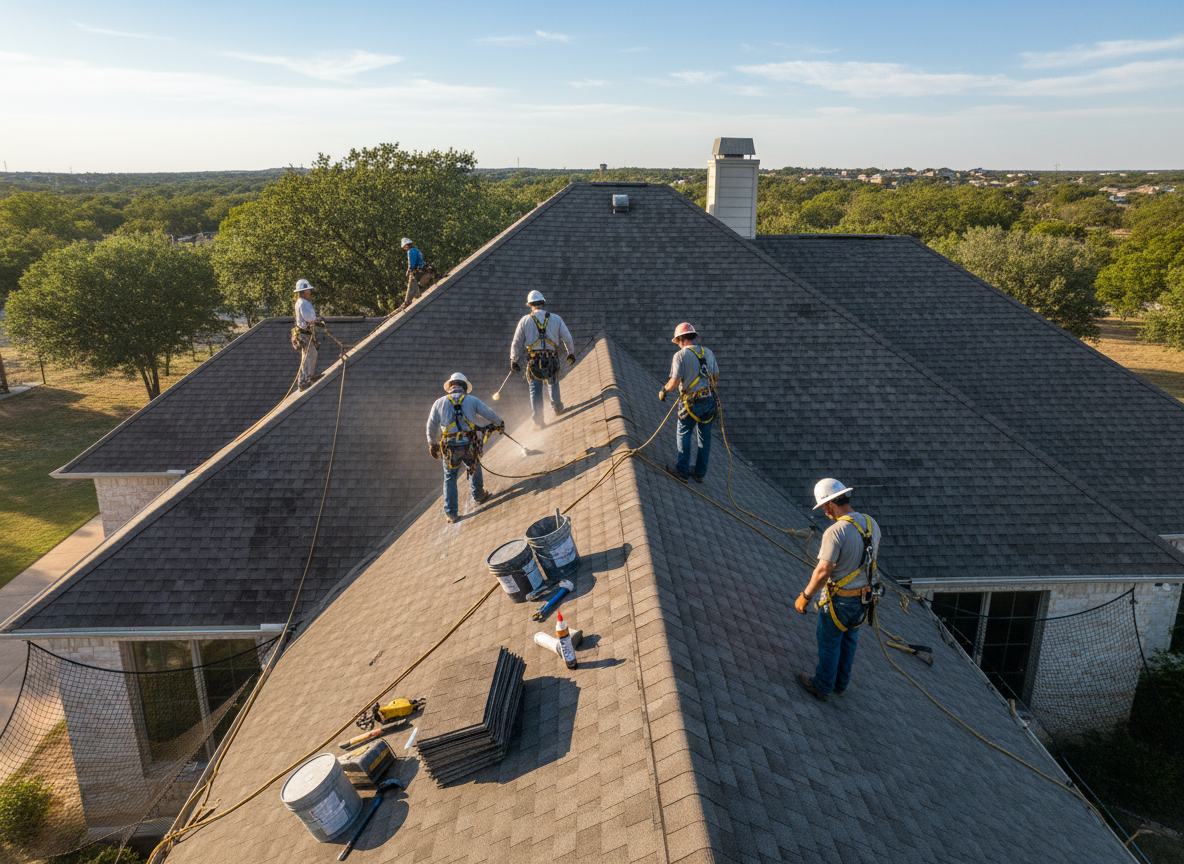
Roof restoration is the middle path between a patch and a full tear-off. It targets a roof that is still structurally sound but has lost the surface that protects it — worn granules, chalky oxidized coating, dried-out sealant at flashings, or a low-slope membrane that has started to gray and crack under ultraviolet exposure. In Houston, that window opens faster than most homeowners expect. A subtropical climate with hot, humid summers and mild winters means the roof never gets a hard freeze to slow things down, but it does get months of intense sun, near-daily humidity, and rain that arrives in sheets. Restoration work is about rebuilding the water-shedding layer and the details around penetrations before the decking underneath is compromised.
The housing stock here shapes what restoration looks like block by block. In the Heights, Montrose, and parts of Midtown, you will find bungalows and early-twentieth-century homes with steep main roofs and small low-slope porch or addition roofs, often layered with more than one generation of shingles. River Oaks and the older blocks near the Museum of Fine Arts district carry more tile and slate-look roofs, where the underlayment and flashing age out long before the tile itself does. Out in Katy, Sugar Land, and Pearland, the dominant roof is architectural asphalt shingle on a relatively young subdivision home, plus low-slope sections over garages and patios. Downtown and around Minute Maid Park, the mix shifts toward flat commercial and mixed-use roofs. Restoration plans have to match the system, not the zip code.
Diagnosis is where restoration jobs are won or lost. A restoration scope should start with the deck, not the surface. We look for soft spots and delamination, check attic-side staining and ventilation, and probe the areas that fail first in this climate: pipe boots, chimney and sidewall flashing, valley metal, drip edge, and any place a previous repair used mastic instead of proper flashing. On low-slope roofs, we check for ponding, blisters, seam separation, and whether the existing membrane can accept a coating or needs to come out. Moisture readings matter — coating over a wet deck traps the problem and shortens the life of the work. If the decking or structure is failing, restoration is the wrong answer, and we say so.
The repair-versus-replacement call comes down to three things: how much of the roof has failed, how old the system is relative to its expected service life, and whether the failure is surface-level or structural. A roof with scattered granule loss, oxidized coating, and tired flashing across an otherwise intact field is a strong restoration candidate. A roof with widespread shingle fracturing after hail, multiple active leaks, or decking that moves underfoot is usually a replacement. Permits vary by municipality — the City of Houston, Katy, Sugar Land, and Pearland each run their own permitting and inspection processes, and some homeowners associations add an approval step of their own — so confirm what your specific jurisdiction requires before work starts.
Signs a Roof Is a Restoration Candidate
Restoration is not a cosmetic service. These are the failure modes that actually point to it:
- Granule loss without mat failure. Shingles shed granules into gutters and at downspout splash pads, but the mat is still intact and the roof is not yet brittle.
- Chalky, oxidized coating on low-slope membranes. A TPO or modified bitumen surface that leaves white residue on your hand is losing its protective top layer.
- Dried, cracked, or pulled sealant at flashings. Pipe boots, sidewall and chimney flashing, and valley metal are the first things to go in Houston heat.
- Isolated shingle damage. A handful of cracked or lifted shingles after a wind event, with the surrounding field still sound.
- Seam separation and small blisters on flat roofs. Localized, not across the whole assembly.
- Staining on the attic side of the deck that traces back to a specific penetration rather than the field.
What does not point to restoration: widespread shingle fracturing, decking that flexes underfoot, multiple unrelated active leaks, or insulation that is saturated and holding water.
Roof Systems and Materials We Restore
Architectural asphalt shingle. The most common roof in Katy, Sugar Land, and Pearland subdivisions. Restoration here usually means replacing failed shingles, re-securing lifted tabs, restoring ridge and hip caps, and renewing flashing rather than coating the field. Shingles that have lost most of their granules or cracked across the mat are past restoration.
Metal. Standing seam and exposed-fastener metal handles heat and rain well, but fasteners, sealant washers, and panel coatings are the wear points. Restoration typically means re-securing and re-sealing fasteners, treating rust, and applying a system-appropriate coating. Coating over active corrosion or a failing panel finish is wasted money — fix the substrate first.
Tile and slate-look. Common in River Oaks and older neighborhoods. The tile itself can last generations; the underlayment beneath it typically does not. Restoration means lifting tile in the affected areas, replacing deteriorated underlayment and flashing, and re-laying the original tile where it survives the lift.
TPO and single-ply low-slope. Found on Downtown and Midtown commercial and mixed-use buildings, plus garage and addition roofs. Restoration means seam repair, patch work, and in some cases a coating system over a sound membrane. Blistered or saturated insulation means the assembly needs more than a surface treatment.
Modified bitumen and built-up. Older flat roofs. Options include a reflective coating over a sound membrane, reinforcing seams, and replacing flashings and drains. Ponding and multiple existing layers usually point toward replacement.
Coatings and waterproofing. Reflective and elastomeric coatings lower surface temperature, which matters in a city where attics bake from May through September. They work on sound substrates and are a poor fit over wet insulation, active leaks, or incompatible existing coatings.
Repair or Replace: How to Decide
| Situation | Usually Restoration | Usually Replacement | |---|---|---| | Shingle condition | Scattered granule loss, intact mat | Widespread cracking, brittle tabs, exposed mat | | Decking | Dry and solid when probed | Soft, delaminated, or flexing | | Leaks | One traced source at a flashing or penetration | Multiple unrelated leaks | | Low-slope membrane | Sound field, failed seams or coating | Blisters, ponding, saturated insulation | | Tile roof | Tile intact, underlayment aged out | Broken tile across the field, failed battens | | Age vs. service life | Mid-life with surface wear | At or past expected service life |
If a contractor recommends restoration without getting into the attic or probing the deck, the recommendation is not grounded in anything.
What to Discuss With Your Contractor
- The full scope in writing, including what is restoration and what is replacement, and where the line falls.
- Deck condition, and whether there is an allowance for replacing sheathing if soft spots turn up after tear-off.
- Flashing and penetration detail — how pipe boots, sidewall and chimney flashing, and valleys will be handled, and with what material.
- Underlayment spec on tile and slate-look work, since that is the layer actually doing the waterproofing.
- Ventilation and attic moisture, especially on older Heights and Montrose homes where soffit and ridge venting may be undersized.
- Coating system and substrate compatibility on low-slope work, plus surface prep and cure-time expectations.
- Permits and HOA approval — who pulls what, and whether your municipality or association requires a submittal.
- Disposal and cleanup, including nail sweep of the yard and driveway.
- How the finished work will be documented so you can see what was done under the surface.
Cost Factors for Roof Restoration in Texas
Restoration pricing is driven by roof size and pitch, the number of penetrations, valleys, and transitions, whether decking or underlayment must be replaced, the coating or material system chosen, and access. Low-slope coating work is usually priced per square foot; steep-slope restoration is priced by the square plus line items for flashing, ridge, and decking repair. Multi-story homes, steep pitches, and tight lots near Downtown and Midtown add labor. Confirm what is included — tear-off, disposal, permits, and any decking allowance — before signing anything.
Timing: When to Schedule Roof Restoration in Southeast Texas
Late spring through early fall is the busiest stretch, and it is also when heat affects coating cure and crew safety, so early-morning starts are common. Hurricane season runs through late November, and a storm that passes nearby can push schedules out for weeks. If your roof has an active leak or a failed flashing, that work should not wait for a convenient season. If the roof is sound but showing surface wear, scheduling in the cooler, drier stretch of late fall and winter generally means better coating conditions and faster turnaround.
Technician insight
In Houston, the thing that catches most people out with roof restoration is that the roof looks fine from the curb while the real failure is happening at the details — pipe boots, sidewall flashing, and the little low-slope porch roofs common on Heights and Montrose bungalows. Homeowners see granule loss in the gutter and assume the whole roof is finished, when often the field is sound and the flashing is what is leaking. The other one is attic heat and humidity: if the deck is holding moisture and the ventilation is undersized, coating or re-covering it just traps the problem, so we check the attic before we quote the surface.
Low-Slope Porch Roof on a Heights Bungalow
A homeowner called about a stain spreading across a back-room ceiling after a heavy rain band moved through. The main shingle roof looked intact from the ground, but the low-slope porch roof tied into it had a failed sidewall flashing and a membrane that had chalked and developed hairline cracks from years of sun exposure. We rebuilt the flashing, repaired the membrane seams, and applied a reflective coating over the sound sections after confirming the deck was dry. The ceiling stain stopped spreading, and the homeowner avoided a full tear-off of the main roof.
Roof Restoration Services We Offer
✓Asphalt Shingle Roof Restoration
Replacing failed shingles, re-securing lifted tabs, renewing ridge caps, and restoring flashing on an otherwise sound architectural shingle roof. Best suited to roofs with surface wear rather than widespread mat failure or storm damage.
✓Metal Roof Restoration and Re-Coating
Re-securing and re-sealing fasteners, treating rust at cut edges and penetrations, and applying a system-appropriate coating to standing seam and exposed-fastener metal. Not appropriate over active corrosion or a failing factory finish.
✓Tile Roof Restoration
Lifting tile in affected areas to replace aged underlayment, battens, and flashing, then re-laying the original tile where it survives. The tile often outlasts the waterproofing layer beneath it by decades.
✓Flat and Low-Slope Roof Restoration
Seam repair, patching, and reflective coating on sound TPO, modified bitumen, and built-up assemblies, plus drain and flashing renewal. Blistered or saturated insulation means the assembly needs replacement, not a surface treatment.
✓Roof Coating and Reflective Systems
Elastomeric and reflective coatings that lower surface temperature and extend the life of a sound low-slope membrane. Requires a dry substrate and compatibility with the existing coating.
✓Flashing, Valley, and Penetration Restoration
Rebuilding the details that fail first in Houston heat: pipe boots, sidewall and chimney flashing, valley metal, and drip edge. Often the single highest-value part of a restoration scope.
✓Storm and Hail Damage Roof Restoration
Targeted repair of isolated wind-lifted or hail-damaged areas where the surrounding field is intact. If damage runs across the whole roof or the deck is compromised, replacement is the honest recommendation.
How it works
- 1
Roof and Attic Assessment
We walk the roof, get into the attic where access allows, and probe the deck for soft spots and delamination. Moisture readings and attic-side staining tell us whether the failure is surface-level or has reached the structure.
- 2
Scope and Material Plan
You get a written scope that separates restoration work from anything that needs replacement, names the flashing and underlayment materials, and states any decking allowance. Permits and HOA submittals are identified at this stage, since requirements differ between the City of Houston, Katy, Sugar Land, and Pearland.
- 3
Surface Prep and Targeted Repairs
Failed shingles come out, lifted tabs get re-secured, flashing and pipe boots are rebuilt, and low-slope seams are cleaned and repaired. On tile roofs, tile is lifted so the underlayment underneath can be replaced. Prep is what determines whether a coating or repair actually holds.
- 4
Restoration Application
Depending on the system, this is new underlayment and re-laid tile, renewed ridge and hip caps, or a coating applied to a verified-dry substrate within its temperature window. Cure time and weather conditions are managed rather than rushed.
- 5
Final Inspection and Walkthrough
We check the details we rebuilt, confirm drainage paths on low-slope sections, sweep the yard and driveway for nails, and walk the finished work with you so you can see what was done under the surface.
Pricing
Restoration pricing is driven by roof size and pitch, the number of penetrations and valleys, whether decking or underlayment must be replaced, the coating or material system chosen, and access. Low-slope coating work is typically priced per square foot; steep-slope restoration is priced by the square plus line items for flashing, ridge, and decking repair. Confirm what is included — tear-off, disposal, permits, and any decking allowance — before signing.