Dallas roofs live in a specific kind of weather. The humid subtropical summers push attic temperatures and roof-surface temperatures high enough that asphalt shingles age from both sides at once, while the mild winters still deliver the occasional hard freeze that works on flashing, sealant, and any place water has already found a way in. Then spring arrives with the storm systems that roll across North Texas carrying hail and straight-line wind, and a roof that looked fine in February can be bruised and granule-starved by April. Roof repair in Dallas is rarely about one dramatic failure — it is usually about heat, wind, and hail taking turns on the same set of shingles.
The housing stock makes that more complicated than it sounds. Oak Lawn, the Bishop Arts District, and much of East Dallas are full of 1920s-to-1940s bungalows with steep gables, original plank decking, and rooflines that have been patched and re-layered more than once. Lake Highlands and North Dallas lean toward 1950s and 1960s ranch homes with wide, low-slope planes and long runs of ridge. Uptown and Downtown Dallas add newer townhomes and mid-rise buildings where the roof might be TPO, modified bitumen, or a steep decorative section over a flat membrane. A roofer who only knows one system will misread half of these roofs, which is why the scope of work matters more than the sales pitch.
Access is its own variable. Mature pecan and live oak canopy shades a lot of East Dallas and Lake Highlands, which is good for the attic and bad for getting a ladder and a dumpster where they need to be. Bishop Arts lots are tight, Uptown townhomes often sit behind shared drives, and anything near Klyde Warren Park or Downtown means coordinating parking and staging with the building or the block. Crews working across the metro move along I-35E, I-30, US-75, I-20, and TX-114, and the same network reaches Fort Worth, Plano, and Arlington, so scheduling around a Dallas job usually means fitting it into a route rather than sending a truck from across the state.
Roof Repair Services in Dallas
Most Dallas repair calls start as a stain on a ceiling, a shingle in the yard after a storm, or water running down a chimney chase. Common fixes here include replacing wind-lifted or hail-bruised shingles, re-sealing and re-flashing pipe boots and chimney surrounds, repairing valley metal where debris has backed water up under the shingles, and patching the low-slope sections that show up on so many Lake Highlands and North Dallas ranch homes. The right repair is the smallest one that actually solves the problem — not a full replacement sold off a single soft spot.
Roof Replacement and Installation in Dallas
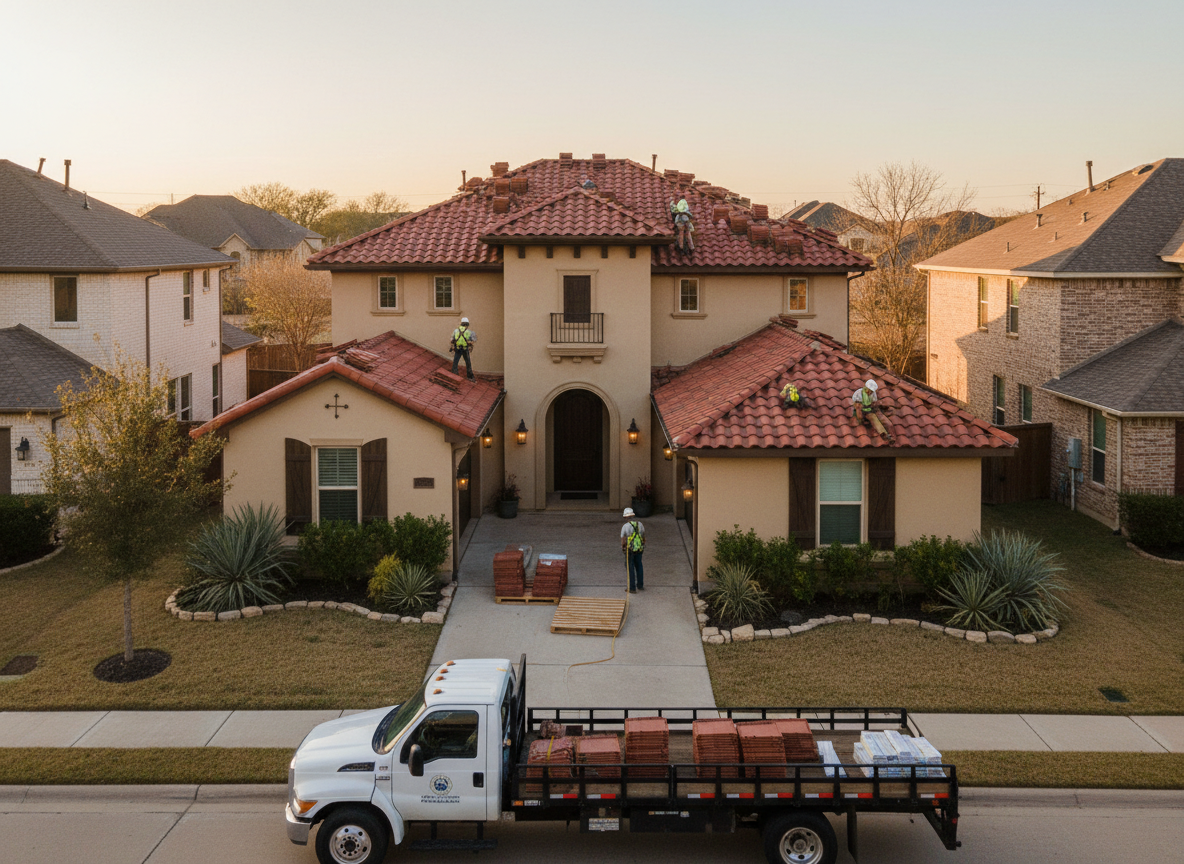
When a Dallas roof is past patching — multiple layers, widespread granule loss, decking that flexes underfoot — replacement is the honest answer. That means tearing off to the deck, replacing any rotted sheathing, and rebuilding the underlayment, flashing, and ventilation before a single shingle goes down. Material choice matters here: architectural asphalt shingles handle the heat well and are the standard across most Dallas neighborhoods, while standing-seam metal and tile show up more in newer North Dallas and Uptown construction. Low-slope sections on bungalows and commercial-adjacent buildings usually call for TPO or modified bitumen rather than shingle.
Storm and Hail Damage Roofing in Dallas
North Texas sits in one of the most active hail corridors in the country, and Dallas gets its share. Hail damage is not always obvious from the ground — it shows up as bruised mat, fractured granules, and dented soft metal on vents, gutters, and downspouts. After a storm, the useful move is a documented inspection: dated photos, a written assessment of what is damaged versus what is simply old, and a clear separation between the two. That documentation is what a homeowner actually needs, whether the claim goes forward or not.
Roof Inspections and Maintenance in Dallas
An annual inspection catches the things Dallas weather does slowly. Sealant around pipe boots and vents dries and cracks. Flashing lifts. Granules collect in gutters. Tree limbs from the oak canopy in East Dallas and Lake Highlands scrape and puncture. A maintenance visit that clears debris, reseals penetrations, and re-nails lifted shingles costs far less than the interior repair that follows a leak, and it gives you a written record of the roof's condition over time.
Choosing a Roofing Contractor in Dallas
Ask for the scope in writing, as
Around Dallas
We regularly work near:
- 📍Dallas Arboretum
- 📍Reunion Tower
- 📍Dealey Plaza
- 📍Klyde Warren Park
- 📍Dallas Museum of Art
Roof Repair in Dallas — Local Notes
- •Heat is the slow killer on Dallas roofs. Attic temperatures climb high enough in July and August to bake the underside of the deck while the sun bakes the top, and the south- and west-facing slopes lose granules first. Ventilation is not a cosmetic upgrade here — balanced intake and exhaust is what keeps a shingle roof from aging twice as fast as it should.
- •Hail and wind arrive together in North Texas spring storms. Hail bruises the mat and knocks granules loose; wind lifts and creases shingles along ridges, rakes, and gable ends. Damage often shows up on soft metal first — vents, gutter aprons, downspouts — which is why a storm inspection should include those, not just the shingle field.
- •Dallas roofing spans very different buildings within a few miles. Original plank decking and multiple shingle layers are common on 1920s bungalows in Oak Lawn, the Bishop Arts District, and East Dallas; wide low-slope planes define Lake Highlands and North Dallas ranches; Uptown and Downtown add steep townhome sections over flat membrane. Permit requirements vary by jurisdiction, so confirm with the local building department before work begins.
Nearby cities we serve